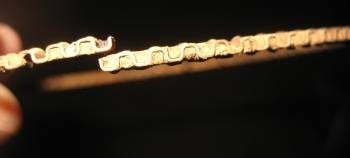
So what's the matter with the frigging holes?
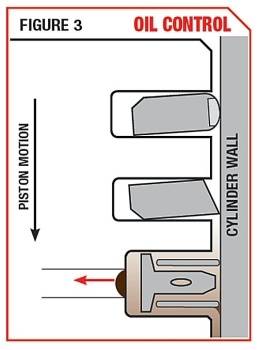
As the name implies, the oil control ring (third ring from piston top) is there to control how much oil remains above them on the cylinder. While the piston moves up and down the bore they scrap excess oil from the cylinder wall, ideally leaving a thin film just enough to lubricate the two upper rings.
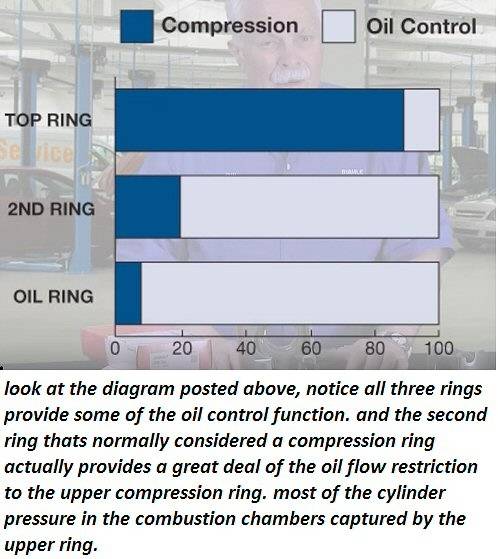
If for whatever the reason the oil control rings start misbehaving, the engine will burn extra amounts of oil.
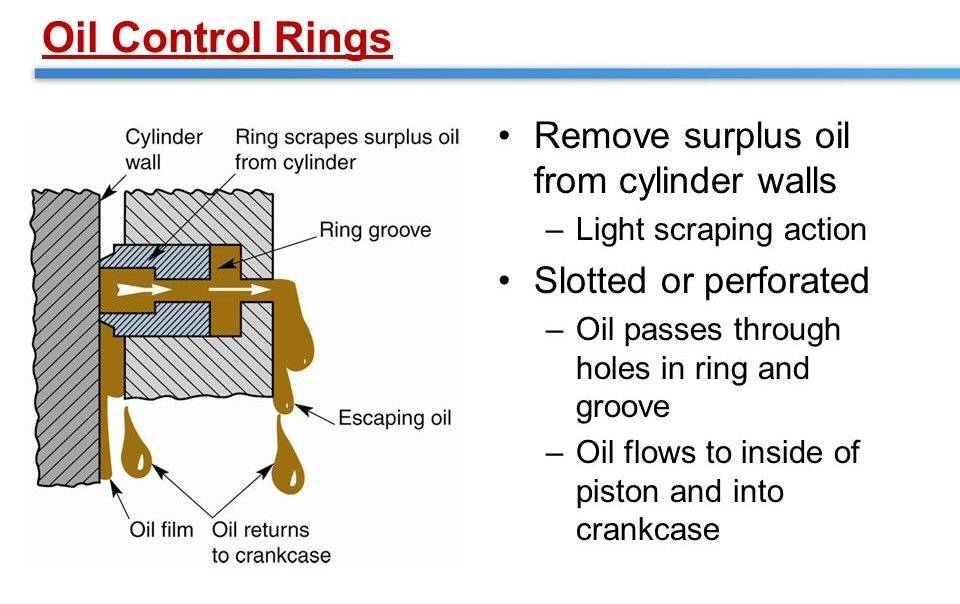
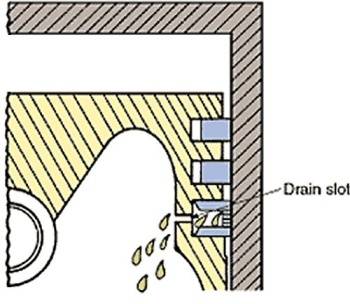
The oil scrapped from the cylinder wall accumulates in the oil control ring's groove, so it must be evacuated from there and returned to the oil pan. And that's what the holes are for:
 . . . . .
 . . . . .
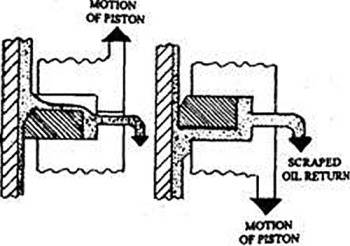
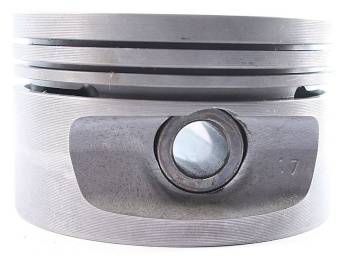
Some piston designs even go a step further from the holes and feature long slots for enhanced oil evacuation from the groove, like the old GM 2.0 SOHC 8V engines in the Kadett GSi 8V (Astra mk2 GTE 2.0 8V in the UK):
 . . . . .
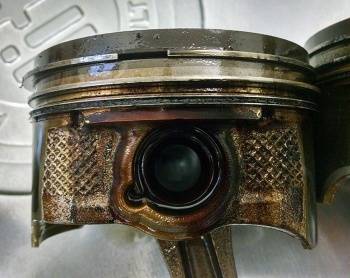
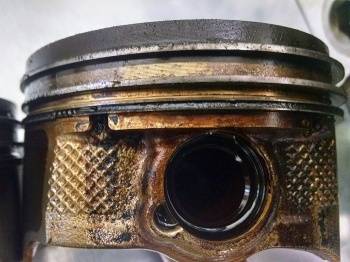
And yet the pistons GM put inside the Z22SE come with not a single oil drain hole at all.
Strategical excerpts from discussions about the Saturn 1.9 engine, whose pistons (first video in this thread) were also made by GM with the same design (no oil drain holes at all) ...
"... The Saturn engine was designed to maximize fuel mileage. Th original engine design dates several years before the 1991 model year, that puts it back into the late 1980s. When it was designed the decision was made to use the new 5W-30 oil which improves fuel mileage. But at that time (late 80s) the hot film strength of the oil was lacking. To attempt to control the wear associated with oil film failure at the oil control rings the thickness of that film was artificially increased by design. The design trick was to drastically reduce the oil return from the oil control ring groove. that decision results in oil being retained in the oil control ring groove and oxidizing to carbon.
If you rebuild the engine, add the oil drain back holes the design team left out. ..."
________________________________________
"... the number of holes determines the amount of oil scraped off of the cylinder walls. This is not a simple exercise to determine how many holes and what size. If you scrape off too much oil you are rewarded with excessive cylinder wear. And, not enough and you continue to burn oil.
A high grade synthetic oil has a very high film strength. This means that very little oil is required to provide protection. So, drill the holes and use a pure high grade synthetic oil and all should be well ..."
________________________________________
"... Synthetic oil has a higher film strength and is harder to turn to carbon (burn). Less oil ring plugging ..."
http://www.saturnfans.com/forums/showthread.php?t=118258&highlight=why+saturns+burn+oil
"... As far as the oil consumption issues, I was a Saturn technician for 12 years and there are alot of similarities between the 1.9l and the Northstar. While at factory training in Tennessee, I had the privilege to chat with the powertrain engineers and the topic of oil consumption came up. The engineers agreed the root cause was oil control rings carbon sticking in ring groove on piston due to no drain back holes behind the oil rings in piston.
They told me next oil consumption overhaul I do (I did quite a few), drill 8 staggerd holes behind oil rings in piston. I had a 97 SL2 that I picked up with a blown engine. I salvaged the lower end, performed the ball hone, soap and water cylinder cleaning, and piston mods. The car does not burn a drop of oil and its been 125k since overhaul. I'm going to do this mod to my Northstar as like the 1.9l, the oil drain holes are absent from the factory pistons ..."
http://www.cadillacforums.com/forums/northstar-engines-system-technical-discussion/617977-northstar-rebuild-01-eldo-post13521881.html#post13521881
"... The reason that Saturn left the oil drain holes out is due to their design goal for a high gas mileage high performance engine as defined as more than 1 HP per cubic inch displacement. To obtain the high fuel efficiency they went with the cutting edge oil technology of the day, the 5w-30 oil.
Now back in the late 80s when this engine was still only on paper there were a lot of problems with the 5w-30 oil. Basically shredded pistons and scored cylinder walls. An oil film failure problem. They were also afraid of the synthetic oils as Mobil was the only kid on the block and the pickup truck commandos were bad mouthing the h**l out of it. so, consciously or unconsciously they deleted the drains and placed a pair of drain cuts on either side of the wrist pin. technology has marched on and this over lubrication is not required and is actually harmful.
In truth it was harmful by the time the first Saturn rolled off the assembly line. hence the oil burning engine. From he late 80s to the beginning of 1991 the additive package for the thin motor oils had been perfected and maintaining a thick oil coat so as to not break it down was not required any more ..."
________________________________________
"... The problem is not excessive oil on the cylinder walls it is the accumulation of carbon in the oil control ring separator. Each of the scraper rings constitutes a knife edge filter, very efficient. The lower ring scrapes on the up stroke and the upper on the down stroke. The oil and carbon lands in the separator area. The flow path to the existing notches is long and torturous.
This results in a low flow velocity, this means the heavy particles sink. So you end up with carbon build up. Now by drilling some additional drain holes in the high thrust areas you provide a path to dump the carbon into the pan before the flow velocity drops. Most oil is scraped off of the thrust sides of the piston. Four large holes will work but 6 smaller ones is better and easier for the home machinist to pull off.
If you want a practical demonstration of low flow velocity take a look at the water saver toilet. ..." :LOL:
________________________________________
"... without holes you will have more oil on the walls even with new rings ..."
http://saturnfans3.saturnfans.com/saturnfa/forums/showthread.php?t=122148&highlight=oil+drain,+piston+holes
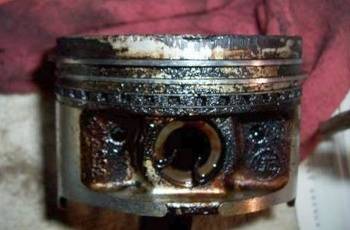
Though Peter Finn's english is almost as bad as mine, his video illustrates very well the nastiness of stuck oil control rings:
https://www.youtube.com/watch?v=OmqNe4NUoXg
The Stucky Horror Show:
 . . . . .
 . . . . .
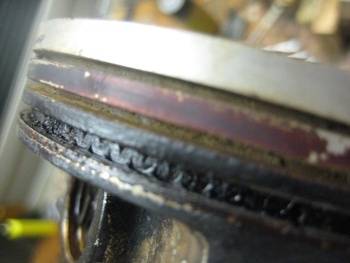
^ The above fossilized ring after excavation =>